Can AI Build Your Church Website? Why You Still Need an Expert
AI can explore and draft a church website in minutes. Here's why choosing the right direction still takes an expert, and how Sunday Best uses AI to build better sites, faster.
We hear this question more and more: why should our church pay a web agency when we could just ask AI to build our website?
It's a fair question. You really can build a church website with AI now. Type a few sentences into an AI site builder and you'll have a working homepage before your coffee gets cold. Some of these tools now publish guides written specifically for churches. If you're handy and patient, it's possible.
So here's our honest answer, from an agency that uses AI every day: AI is great at exploring and drafting. It still can't tell you which idea is right. That part takes judgment, and judgment still takes someone with real expertise in the room.
What happens when you ask AI to "make me a church website"
AI will make something. Sometimes it's good. Sometimes it isn't, and you may not be able to tell which.
AI tools still make mistakes. They hallucinate, skip best practices and answer the question you asked instead of the one you should have asked. "Make me a church website" says nothing about who the site is for, what a first-time guest needs to find, how your staff will update sermons and events, or how it connects to Planning Center. The AI fills those gaps with guesses.
There's a quieter problem too. AI works by predicting the most likely answer, so left on its own it drifts toward the average. Ask for a church website and you'll get the average of every church website it has seen: a worship photo behind "Welcome Home," then three cards for Plan a Visit, Watch Online and Give. It works. It also looks like everyone else's site and says nothing about your church.
That's not a knock on the tools. Writing the code is the easy part now. What AI can't do is decide what should be created, then look at the result and say, "Yes, this should exist this way." That takes someone who knows what good looks like.
Using AI well takes an expert in the room
Here's what has changed in our own work. We can try far more directions for a homepage or a ministry page than we ever could by hand. That's a real gain, but more options only help if someone can tell the strong ones from the weak ones. Most of what AI produces should be thrown out.
AI-assisted work goes well when an expert:
- Brings the right ideas and gives the AI clear direction
- Understands what the tool is doing and why
- Picks the directions worth developing and cuts the rest
- Catches mistakes and pushes back when the AI is wrong
- Signs off before anything goes live
That last step matters more than people expect. A Stanford study found developers using an AI assistant wrote less secure code than those without one, and were more confident their code was secure. AI's mistakes tend to look convincing, which makes them easy to miss.
For a church, a missed mistake looks like a visitor who can't find service times, a page a screen reader can't navigate, or content Google can't make sense of.
How Sunday Best uses AI: human first, human last
We've worked AI tools into our process, and it's helping us work more efficiently and build better websites for our clients. Every project follows the same order:
- Human first. We set the strategy and direct the AI. We decide what gets built, who it's for and why. That structure is what keeps fast work from turning into noise.
- AI in the middle. AI does the exploring and drafting. It helps us push a design direction further, compare layouts and content approaches side by side, and handle repetitive build tasks. Weak ideas show up fast when they sit next to stronger ones.
- Human last. We choose what moves forward, review everything the AI produced, fix what's off, and refine the details until the site follows best practices and feels carefully made. A faster process is no excuse for sloppy craft.
We never set AI loose on a task and skip the review. AI sits in the middle, and our eyes are on everything that ships.
For you, that means we can explore more ideas for your church, your site gets done sooner, we can build more advanced features, and you end up with a better website.
Related: Our Church Website Process
Why your church website shouldn't look AI-made
People can feel it when something was mass-produced by a machine, and more and more, it turns them off. A 2026 Gartner survey of U.S. consumers found 65% think brands are putting out too much AI-generated content, and 57% say it has made them trust brand messaging less.
That matters even more for a church. Your website is often the first impression someone gets of your people. Humans connect with humans. If your site screams "AI-built," with stock-feeling layouts, generic copy and artificial photos, visitors pick up that nobody really thought about them. That's the opposite of the welcome you want to give.
So here's where we draw the line in our own process: every design direction at Sunday Best is human-made. The vision, the look and feel, the copy and the creative decisions come from our team and from getting to know your church. We use AI to explore more options and move faster, not to decide what your church looks or sounds like. Making those calls is the part that makes the site yours, and it's how we make sure it feels personal and not like AI slop.
The platform matters as much as the build
Your website has to last. It needs to be secure, easy for your staff to update, and able to grow with your church for years. Choosing that foundation takes expertise too.
AI site builders and "vibe coding" tools make it easy to publish fast. The risks show up later.
Security
AI-written code isn't secure by default. Veracode tested more than 100 AI models and found security flaws in 45% of the code they wrote. In May 2026, researchers at RedAccess found about 5,000 apps built on AI coding platforms with little or no security, and roughly 40% of them exposed sensitive data like medical and financial records.
A simple informational site is lower risk than a custom app. But church sites often collect prayer requests, connection cards, kids ministry sign-ups and gifts. That's personal information, and someone needs to know exactly how it's handled.
Sustainability
Who maintains the site when the volunteer who built it moves on? Generated code can be hard for anyone else to work with. Your communications director should be able to post next week's sermon without opening a code editor or writing a prompt and hoping for the best.
Scalability
Sites built from one-off generated pages tend to drift. Buttons, headings and spacing stop matching from page to page because there's no shared system underneath. Add a campus, a ministry or a new sermon series, and things start to break.
Why we build on Webflow
This is why every Sunday Best site is built on Webflow, with AI helping along the way. Webflow gives churches:
- Managed hosting with SSL, a global CDN and no plugins to patch (more on Webflow security)
- Visual editing, so your staff can update sermons, events and pages themselves
- Clean structure and SEO controls that help you show up in Google and in AI answers
- A proven platform used by large enterprise companies
We also build with a shared component system, so every page stays consistent and new sections are easy to add as your church grows.
When building it yourself with AI makes sense
AI site builders have real uses. Here's where we think they make sense:
- You're experienced with websites. If you're tech-savvy and already know the ins and outs of building a site well, you can direct AI tools yourself and catch their mistakes. You're the expert in the room.
- Small landing pages and campaigns. A Christmas or Easter service page, a one-off event or a short-term campaign is a good fit. These pages are simple, seasonal and don't need to last for years.
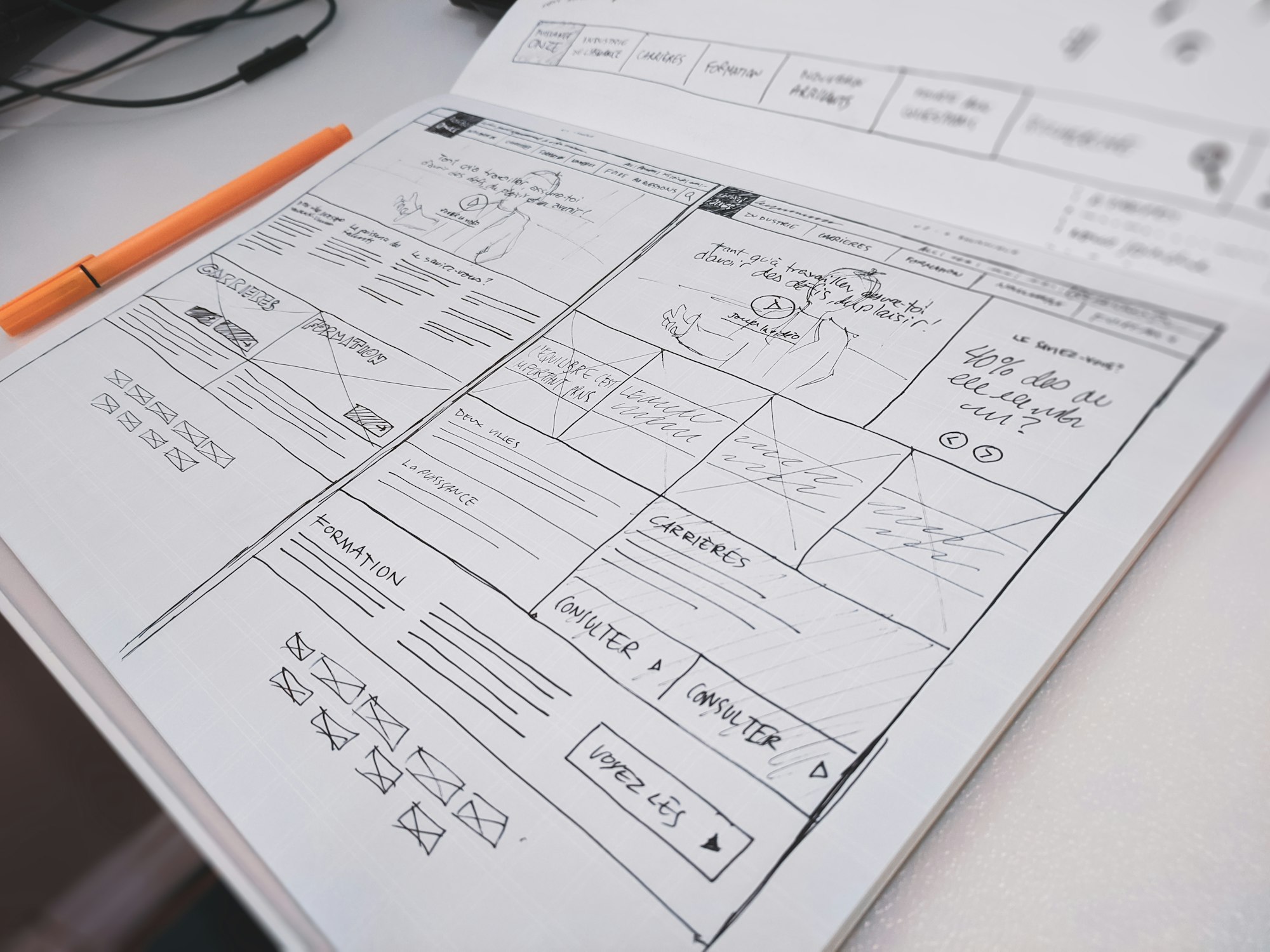
- Exploring ideas before you talk to an agency. This is where AI shines. Instead of trying to describe your vision in words, mock up a few directions and show us. It gives your web team a head start, and we'll help you decide which ideas are worth building on.
Whatever you build, keep it simple and have someone knowledgeable look it over before you collect any personal information through it.
But if your website is how new people find your church, and your staff needs to run it for years, it's worth having an expert in the room.
Related: Custom vs. Template Church Websites
Hire experts who use AI well
AI is changing how websites get built, including ours. It lets us explore more, draft faster and build more. It hasn't replaced the need for someone to choose the right direction for your church and confirm the work is ready before it goes live.
That's the role we play for churches. If you're comparing options, here's how to choose a church website agency. And if you're deciding between DIY with AI and bringing in help, get a quote and we'll show you what an expert-led, AI-assisted build looks like for your church.
Related Resources
Can AI Build Your Church Website? Why You Still Need an Expert
AEO for Churches: How to Get Found in the Age of AI Search

How to Make the Case for a New Church Website to Your Leadership

How to Choose a Church Website Agency
Local SEO for Churches: How to Show Up When People Search
Church App vs Church Website: Do You Need Both?
Church Website Accessibility: A Practical Guide for Welcoming Everyone Online
How Much Does a Church Website Cost? A Transparent Pricing Guide

WordPress vs Webflow: Why We Build Every Church Website on Webflow

Is Webflow Secure? Why Churches Can Trust Webflow for Their Website
The Ultimate Church Photography Guide
Your Church Website is the New Front Door

5 Advanced Webflow Features Large Churches Can Leverage
Visiting a Church for the First Time is hard
5 Things Every Church Website Should Include
Multi-Campus Church Websites
The Most Important Page on your Church Website
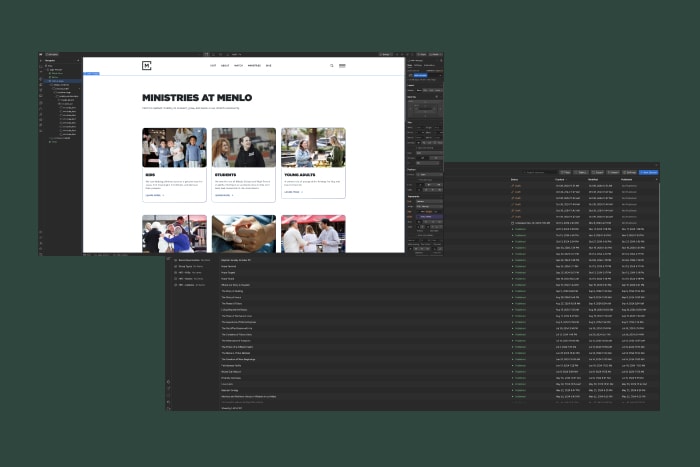
How to Edit Your Church Website in Webflow
Best Church Website Builders in 2025: A Complete Guide
SEO: A Guide for Churches

How to Write Great Website Copy

Custom vs. Template Church Websites
What is Webflow? The Best Platform for Church Websites
The Best Church Websites of 2024

Who is Your Church Website For?


Are you ready?
